


Optimize Your Website for AI Engines (Along with Traditional SEO)
Stay ahead of the curve with our insights into 2024’s most effective content marketing strategies—what works, what doesn’t, and how to capture your audience.
Search is evolving fast. It’s no longer just about ranking on search engines—it’s also about being discovered and recommended by AI tools like ChatGPT.
To stay ahead in 2026 and beyond, your website needs to be optimized for both traditional SEO and AI-driven search.

1. Start with Strong SEO Fundamentals
Before optimizing for AI, get the basics right.
Focus on:
- Fast loading speed
- Mobile-friendly design
- Proper heading structure (H1, H2, H3)
- Keyword optimization
Search engines still rely on these signals—and AI systems often pull from well-optimized content.
2. Create Clear, Structured Content
AI tools prefer content that is easy to understand and well-organized.
Make sure your content:
- Answers questions directly
- Uses simple, clear language
- Includes headings and subheadings
- Breaks information into short sections
Think: easy for humans = easy for AI.
3. Focus on Question-Based Content
People now search in a more conversational way—especially when using AI.
Optimize for queries like:
- “How to…”
- “What is…”
- “Best way to…”
This increases your chances of being picked up by AI-generated answers.
4. Build Topical Authority
AI engines prioritize trusted and knowledgeable sources.
You can build authority by:
- Publishing consistent, niche-focused content
- Covering topics in depth
- Linking related articles together
The more expertise you show, the more likely AI will recommend your website.
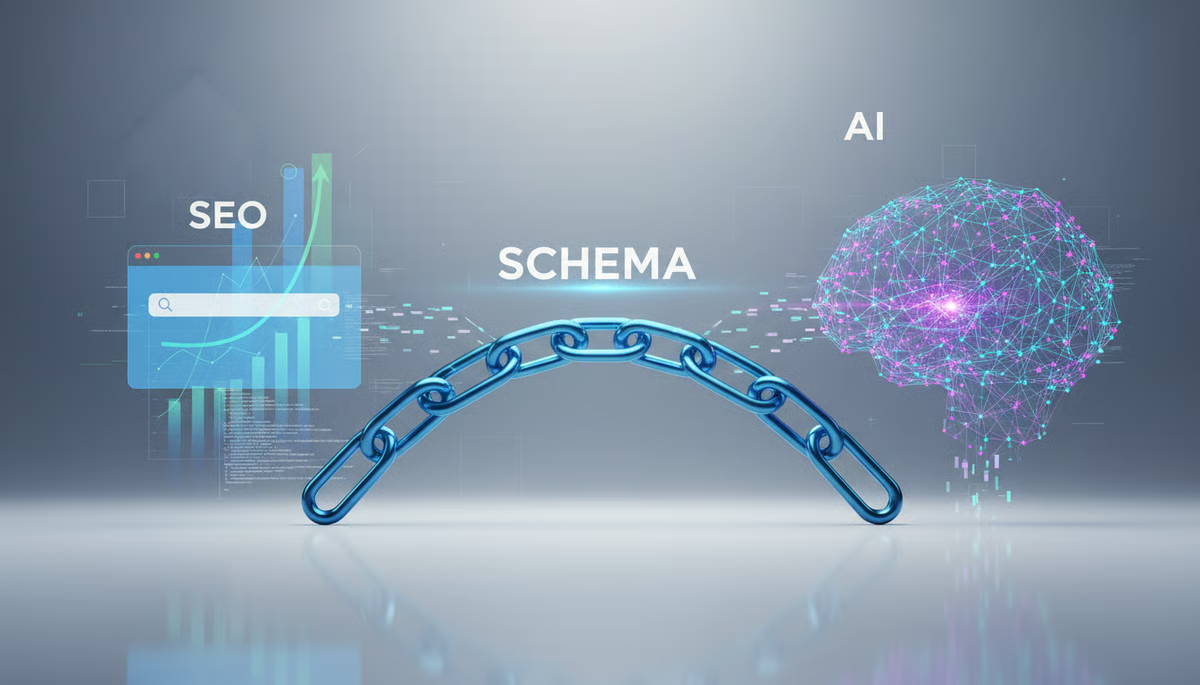
5. Use Structured Data (Schema Markup)
Structured data helps search engines and AI understand your content better.
It can highlight:
- Services
- Reviews
- FAQs
- Business information
This improves both your search rankings and AI visibility.
6. Optimize for Featured Snippets & AI Answers
AI often pulls content similar to featured snippets.
To increase your chances:
- Provide short, direct answers
- Use bullet points and lists
- Add concise summaries under headings
This makes your content more “extractable” for AI.
7. Keep Your Content Updated
Outdated content is less likely to be recommended.
Regularly:
- Update information
- Improve existing pages
- Add new insights
Fresh content signals relevance to both search engines and AI tools.
8. Build Trust & Credibility
AI systems prioritize reliable sources.
Boost credibility by:
- Adding author information
- Showing real business details
- Using secure (HTTPS) websites
- Including testimonials or case studies
Trust is a major ranking factor—both for humans and AI.
Final Thoughts
Traditional SEO isn’t going away—but it’s evolving.
To succeed in 2026, your strategy should combine:
- Search engine optimization (SEO)
- AI-friendly content structure
Websites that adapt to both will have a clear advantage in visibility, traffic, and growth.
Ready to Future-Proof Your Website?
Optimize your website not just for search engines—but for the future of AI-driven discovery.